

You wake up stiff. Your shoulder aches for no reason. Getting out of a chair or off the floor seems harder than it should be. Last month it was your hip.
Even if you’ve been “doing all the right things” (or most of them!) — lifting weights, doing yoga, eating well — your body is having a meltdown anyway.
It’s not in your head, and your symptoms are real. And yes, you are getting older, but that doesn’t mean you have to — or should — accept this as normal or OK.
If you’re in your 40s or 50s, there’s a name for this now: the musculoskeletal syndrome of menopause. And it’s far more common than most women are told.
The short version
The musculoskeletal syndrome of menopause is a name for the joint pain, stiffness, muscle loss, bone loss and tendon trouble that often show up as estrogen declines. More than 70% of women have musculoskeletal symptoms during the menopause transition, and about 1 in 4 find them disabling. The best-supported tools are progressive strength training, smart load management and a conversation with your doctor about all your options.
What is the musculoskeletal syndrome of menopause?
It’s an umbrella term. It groups together body changes that tend to arrive with perimenopause and menopause:
- Joint pain and stiffness (arthralgia)
- Loss of muscle mass and strength (sarcopenia)
- Loss of bone density
- Faster progression of osteoarthritis
- Tendon and ligament problems
Orthopedic surgeon Dr. Vonda Wright and colleagues introduced the term in 2024, in Climacteric, the journal of the International Menopause Society. None of these changes is new. What’s new is seeing them as one pattern, with one shared thread: estrogen.
Why does a name matter? Because a pattern with a name gets noticed. Without one, your shoulder goes to one specialist, your knee to another, and nobody connects them to the hormonal shift happening in the background.
How common is it?
Very.
Wright’s team estimates that more than 70% of women experience musculoskeletal symptoms through the menopause transition. About 25% are disabled by them.
A 2026 meta-analysis in JBJS Open Access pooled 37 studies and 93,021 women across 22 countries. Here’s what it found for muscle or joint pain:
| Menopause stage | Women with muscle or joint pain | Women with back pain |
|---|---|---|
| Before menopause | 40% | 42% |
| Perimenopause | 57% | 57% |
| After menopause | 59% | 59% |
Perimenopausal women were about 35% more likely to report muscle or joint pain than premenopausal women.
Why does estrogen matter for joints, muscles and bones?
Most of us were taught estrogen is a reproductive hormone. It does far more than that.
Estrogen helps maintain bone, cartilage, tendons, ligaments and muscle. A 2026 review in the Annals of Rehabilitation Medicine described what happens as it falls:
- Bone: density can drop 2% to 5% a year in early menopause.
- Tendons: repair slows. Achilles and rotator cuff tendinopathy, plantar fasciitis and stress fractures become more common.
- Ligaments: fluctuating estrogen in perimenopause may make ligaments temporarily looser, so joints feel less stable.
- Muscle: loss speeds up, which means less support for every joint you have.
Put those together and you get the picture so many of our patients describe. Nothing shows up dramatically on an X-ray. But everything feels less resilient.
Is it menopause, or is it just aging?
Honest answer: Yes, you’re getting older, and shifting hormones are a normal part of that. So it’s hard to separate the two, and researchers say so.
Most studies show an association, not direct cause and effect. Age is a competing factor. Pain is also multifactorial. Sleep, stress, activity level, past injuries and caring for kids and aging parents all add load.
What the research does make clear: Symptoms climb through the menopause transition. And treating each sore spot as an isolated problem instead of looking at the person and connecting the dots misses what’s actually going on.
What actually helps
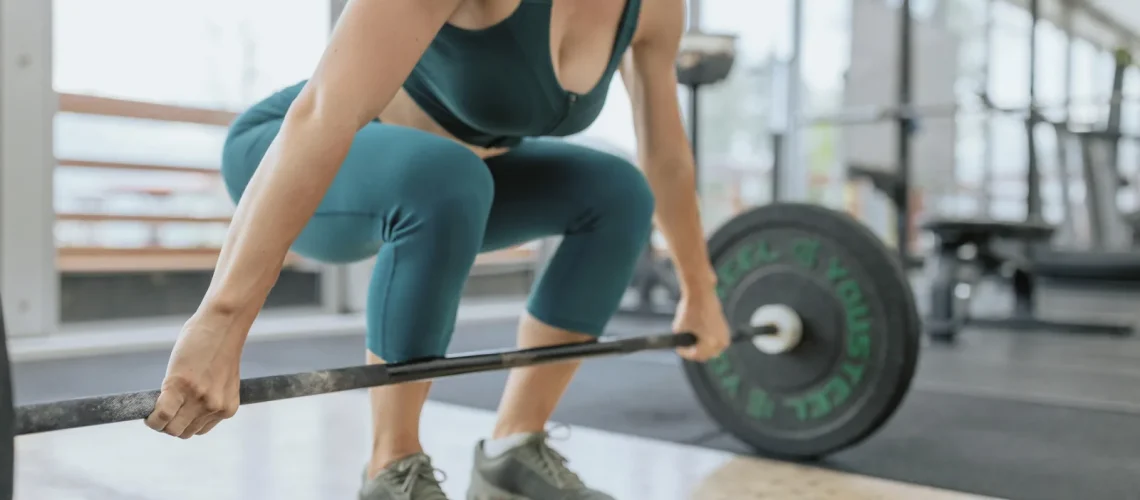
Lift heavy things. Muscle and bone respond to load. In the LIFTMOR randomized trial, postmenopausal women with low bone mass did twice-weekly, 30-minute supervised sessions of heavy resistance and impact training for 8 months. Lumbar spine bone density rose 2.9% in the training group and fell 1.2% in the low-intensity group, and every physical function measure improved. Only one minor adverse event was reported.
That’s not a license to load up a barbell on Monday. It’s evidence that bone and muscle can adapt, at any age, when the load is right for you.
Build gradually. More is not always better. Rapid increases in activity, especially if you haven’t been active, increase your risk of injury. Slow and steady keeps you going. This is why we evaluate strength and mobility, and find a safe starting point.
Sleep and stress have real physical effects. Poor sleep and chronic stress turn up pain and slow recovery. They’re part of the plan, not a side note.
Talk with your doctor about hormone therapy. For some women it’s a reasonable option. The 2026 review notes that starting hormone therapy early can lower fracture risk by 20% to 40%, but it isn’t right for everyone. There are a lot of options and info out there, and like any treatment, there is no one-size-fits-all.
A good doctor will look at the big picture, discuss risks and benefits, and offer options that make sense to you.
Flare-ups happen. A rough week doesn’t mean you’re going backward. It means that life gets “lifey” sometimes, and sleep, nutrition and stress can get out of hand. Your body is just telling you so. We adjust and keep going.
How we help at Frederick Chiropractic Wellness Center
Every plan here is individualized. We call it N=1.
We look at the whole picture. Your history, your hormones and life stage, your sleep, stress and activity, and what you want to get back to. Not just where it hurts.
We help calm things down so you can move. Depending on what we find, that may include chiropractic adjustments, Frequency Specific Microcurrent (FSM), laser therapy, red light therapy and PEMF, used where they fit.
Strength and mobility are essential. Targeted rehab and movement therapy are part of every plan, starting at a level your body can handle and progressing as you get stronger.
We aim for independence. The goal is for you to understand your body and keep doing what you love, with less need for us over time.
Ready to find your starting point? Book an assessment or call/text (301) 695-0032.
When to see your doctor
New, widespread joint pain deserves a proper workup. Other conditions can look similar, including thyroid problems and inflammatory or autoimmune conditions (which can also be affected by hormones). See your physician if you have:
- Hot, swollen or red joints
- Morning stiffness that lasts more than an hour
- Pain with fever, rash or unexplained weight loss
- Sudden weakness or numbness
We are happy to work with your other healthcare providers when something doesn’t seem right and needs more investigation.
Frequently asked questions
What is the musculoskeletal syndrome of menopause?
It’s a term introduced in 2024 for the group of musculoskeletal changes linked to declining estrogen: joint pain and stiffness, muscle loss, bone loss, faster osteoarthritis progression, and tendon and ligament problems. It isn’t a single disease or test. It describes a common pattern.
How common is joint pain in perimenopause?
Very common. A 2026 meta-analysis of 93,021 women found 57% of perimenopausal women reported muscle or joint pain, compared with 40% before menopause. Researchers estimate more than 70% of women have some musculoskeletal symptoms through the transition.
Can perimenopause cause shoulder pain?
It may contribute. Rotator cuff tendinopathy becomes more common as estrogen declines, and one small study found more shoulder joint inflammation in perimenopausal women. Shoulder pain still has many possible causes, so it’s worth a proper assessment.
Does strength training help menopause joint pain?
Strength training is one of the best-supported tools for the muscle and bone side of menopause. In one randomized trial, supervised heavy resistance training improved spine bone density and physical function in postmenopausal women with low bone mass. Start where your body is and progress gradually.
Is it safe to lift heavy weights after menopause?
For many women, yes, with good coaching and gradual progression. The LIFTMOR trial used supervised heavy lifting in postmenopausal women with low bone mass and reported only one minor adverse event. Get assessed first so your starting point matches your history and current strength.
Should I consider hormone therapy for joint pain?
That’s a conversation for you and your physician. Early hormone therapy can lower fracture risk, but it isn’t appropriate for everyone. Exercise, sleep and load management help regardless of what you decide.
This article is for general education and isn’t a substitute for personalized medical advice. Talk with your healthcare provider about your own symptoms and options.
References
- Wright VJ, Schwartzman JD, Itinoche R, Wittstein J. The musculoskeletal syndrome of menopause. Climacteric. 2024;27(5):466-472. doi:10.1080/13697137.2024.2380363
- Kruse C, McKechnie T, Dworsky-Fried J, et al. Musculoskeletal manifestations of perimenopause: a systematic review and meta-analysis of 93,021 women. JBJS Open Access. 2026;11(1):e25.00254. doi:10.2106/JBJS.OA.25.00254
- Ansari M, Hussain F, Shopon M, Ajmal H, Asif M, David S. Hormonal shifts and structural strain: a literature review of menopause and perimenopause in relation to overuse injuries and stress fractures. Ann Rehabil Med. 2026. doi:10.5535/arm.250134
- Watson SL, Weeks BK, Weis LJ, Harding AT, Horan SA, Beck BR. High-intensity resistance and impact training improves bone mineral density and physical function in postmenopausal women with osteopenia and osteoporosis: the LIFTMOR randomized controlled trial. J Bone Miner Res. 2018;33(2):211-220. doi:10.1002/jbmr.3284